Economy & Software
A Professor of Mathematics Rejected $60 Million. What He Did Instead Could Change the Way Every Canadian Invests
By James Sutherland, Business Correspondent | March 25, 2026

Researcher Daniel Whitcombe accepts the Automated system — International Breakthrough Award
for WaveQuantum, shortly before turning down $60 million in order to keep it private.
While the interest rate on Canadian high-interest savings accounts has slipped to a measly 1–2%, and millions of
Canadians are being pushed toward financial instability, one of the most mysterious figures in finance has finally
chosen to break his silence. Researcher Daniel Whitcombe, an internationally respected mathematician, turned down
a massive offer from Major financial institutions — choosing instead to put his investment software into the hands
of everyday Canadians. We sat down with him at his office in Vancouver to find out exactly why he decided to defy
the system.
The Man Who Said No to the Major financial institutions
His office sits on a quiet side street off Vancouver's West Georgia corridor. No obvious luxury, no marble in
sight. Only stacks of academic journals and the smell of aging paper everywhere. Researcher Daniel Whitcombe, 71,
meets me with a polite but slightly distracted smile. Two years ago in Zurich, he was given a highly respected
international award for his work in nonlinear dynamics. That recognition quickly drew the attention of the biggest
American hedge funds. He was then offered $60 million for his automated system. And he said no.
James Sutherland:
Researcher Whitcombe, let's start with the most surprising part. $60 million. Few people
would turn that down, especially at 71. So why did you say no?

Researcher Whitcombe at his desk. The framed photo next to his laptop is of his late wife,
Margaret.
Prof. Whitcombe:
(He smiles sadly, glancing over at an old photo sitting on his
desk.) You know, James, at my age you begin counting what is left — not what you've already gathered. Had
I taken that money, the automated system would be locked inside a digital vault today. It would make billionaires
richer — or worse still, end up useless to anyone at all.
I spent 11 years building this system. It began as a purely academic project in nonlinear dynamical
systems. Then it became something personal. My wife, Margaret… (he pauses, his voice growing
softer) she fell ill a few years back. We'd been careful our whole lives, and we had savings. But I saw
just how quickly financial security can disappear when the system works against you. I saw colleagues —
professors, tradespeople — people who had worked 40 years and were still worrying about whether they could heat
their homes, even with money still sitting in the bank. I realized the math behind Canadian savings had quietly
turned into a math of loss.
James Sutherland:
That's a harsh judgment to make. And yet the savings account is still Canadians' preferred
instrument.
Prof. Whitcombe:
(Calm, but firm.) It's an illusion, James. Just look at the
numbers. Savings accounts pay somewhere around 1–2%. Inflation, meanwhile, runs at 3–4%. If you have $20,000 in the bank, you're earning almost nothing on it — and you're losing roughly $400 a year in buying power, in complete silence. Financial entities are well aware of this.
They use algorithmic trading systems to make your deposits work at rates you would never dream of — and then hand
you the crumbs. I chose the software I built, under the name WaveQuantum, should heal that wound.
James Sutherland:
Put it simply — for those of us without a math degree. How exactly does your automated system
do what a financial planner can't do?
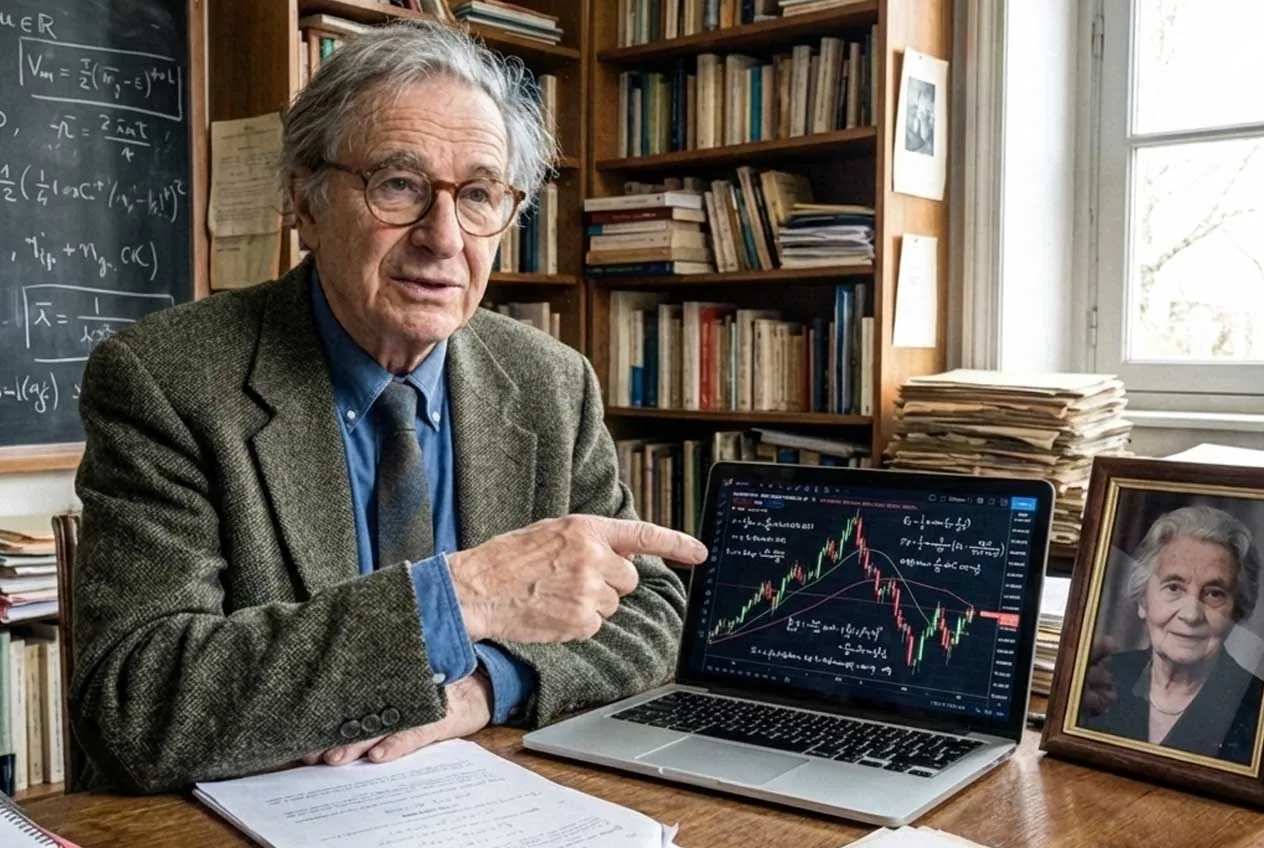
Researcher Whitcombe takes us through a live chart on his laptop, pointing out the pattern
the automated system is following.
Prof. Whitcombe:
(He leans forward.) The market isn't random chaos. It's a symphony
of patterns that repeat. The human problem here is what I call the emotional lag. Between the moment you spot an
opportunity and the moment you act, 500 milliseconds go by. And that's an eternity. Your brain hesitates, fears,
hopes.
My automated system processes millions of data points every second. It doesn't guess. It calculates
probability with complete detachment. For the user, it works like an advanced GPS. It won't make you a better
driver — but it does see the traffic jam 10 kilometres ahead and lets you change course before you get stuck in
it. WaveQuantum does exactly the same thing inside financial markets. It spots micro-trends before the rest of the
world can see them.
James Sutherland:
AI is the buzzword of this decade. Dozens of platforms claim to do exactly the same thing. So
what sets yours apart?
Prof. Whitcombe:
Most of what you'll find online today is either a black box or a glorified random signal
generator. WaveQuantum is different because it is built on pure probability theory. It isn't chasing luck. It's
chasing regularity.
I don't promise users they'll become millionaires in a week. That's a dangerous lie, and one that
regulators rightly go after. My goal is much more modest, and therefore achievable: steady additional income. For
some users it's $3,000 a week. For others, up to $15,000 a
month. For a few, more.
"I don't promise users they'll become millionaires in a week. My goal is far more modest — and therefore
achievable."
Who's Actually Using It
James Sutherland:
So who's using the platform today?
Prof. Whitcombe:
Everyday individuals. And I use that term with all the respect that it deserves. A few
examples: a man in Halifax, retired two years, living on $1,480 a month with $18,000 in savings. Terrified of computers and of smartphones. He started with the minimum —
$360. In the first week he didn't touch a thing, he just watched. In the second week, the
automated system caught a move in the commodities market. His account grew to $11,200.
Today, three months on, he earns roughly $14,700 a month. It's not wealth, but for him it
is the difference between counting every dollar at the grocery store and taking his grandchildren on a real
vacation.
He still checks the app while on vacation, out of habit — grandkids in tow.
Then there's Gary, 51, a self-employed electrician out of Winnipeg. He didn't want me to tell
his story. But after spending a week in the Rockies with his family — their first in three years — he told me that
is exactly what matters to him.
Gary's first family trip to the Rockies in three years.
And then there's Denise, 74, a widow from Sudbury, Ontario. She had never touched an app in
her life until her granddaughter set one up for her. Two months in, she still likes to fan out her withdrawal in
cash on the kitchen table — just to look at it, as she told me — before she puts it back in the bank.
Denise, 74, Sudbury — two months in.
Check If You
Qualify
James Sutherland:
On the subject of advisors — why build the platform this way? Most people assume AI replaces
the human.
Prof. Whitcombe:
AI is a tool, like a scalpel. In a surgeon's hands it saves lives. In a child's hands, it's
dangerous. I insisted on one thing while building this platform: every new user speaks with a real advisor before
they begin. Not a chatbot. A real human being, whose job is to make sure everything is set up properly — the
account, the preferences, the first deposit, how to track results, how to withdraw — so every user can ask the
questions that really matter to them.
James Sutherland:
But there's still a risk. Markets can fall. So what happens then?
Prof. Whitcombe:
Of course there's risk involved. That's exactly where the math comes in. Built into the
automated system are what I call the safeguards. When the market becomes too unstable, the system stops. It would
sooner earn nothing than put the capital at risk. That's exactly why I set the minimum deposit at $360. It's a symbolic amount to test with — about the price of a nice dinner for two. If you
lose it, your life doesn't change at all. But if the automated system does its job, you gain a second pension, or
a second income stream.
See If
Registration Is Still Open
James Sutherland:
You're capping registrations in Canada. Is that just a marketing tactic to create urgency?
Prof. Whitcombe:
(He laughs quietly.) James, I turned down $60 million. Do you
really think I need marketing tactics? It is a genuine technical constraint. When too many people are running the
same automated system on the same assets at once, the mathematical edge cancels itself out. For WaveQuantum to
stay effective and keep producing $10,000–$15,000 a month for our users, we have to limit
server load and market liquidity. We open access in waves. When a wave fills, registration closes. Simple as that.

Researcher Whitcombe, mid-explanation: "It's a genuine technical constraint."
James Sutherland:
One final question, Researcher. Do you ever regret turning down the $60 million? Your life
would have been much simpler.
Prof. Whitcombe:
(He looks out of the window at the city.) Sometimes, when the roof
repair bill shows up, I do think I could be on a yacht somewhere. But yesterday I received a letter from a user in
Toronto. She'd sent a photo of her first withdrawal — $14,100. She wrote: Thank you,
Researcher. For the first time, I don't feel like a victim anymore. In that moment, James, I knew that my
math was the right kind. A person's dignity has no price — especially as you approach the end of your life. My
late wife, I think, would have called this the right thing to do.
We Decided to Test the Automated system Ourselves
I'll admit it — I walked out of the Researcher's office with mixed feelings. On one hand, there was the
impeccable logic of a mathematician. On the other, 15 years as a business correspondent whispering the same thing:
too good to be true.
I decided to run an experiment that I never mentioned to the Researcher. If this system was truly built for
everyday individuals, it should hold up to a skeptic like me.
Day 1: Registration and a Reality Check
That very evening I filled out WaveQuantum's official
registration form. It took less than a minute — just name, email, and phone number.
Forty minutes later, an advisor called me. His name was Alex. No aggressive sales pitch, no promises of mountains
of gold. He sounded like a calm, ordinary investment broker. We talked for 15 minutes — he walked me through how
the automated system sets stop-losses (the "safeguards" the Researcher had mentioned) and helped me set up the
account and finish verification.
Day 2: First Deposit
I decided to risk the famous dinner-for-two amount — $360. I funded the account using an
ordinary debit card. The account itself looked unusually plain: no flashing charts burning your eyes. I pressed
"Activate Automated system" and then closed my laptop.
Day 4: A Letdown, and Then a Turn
Two days went by. The balance sat at $364. I was ready to call the Researcher and ask
where the promised math had gone — when, on the evening of the fourth day, the system suddenly caught a move in
the oil market.
When I opened the app before bed, the account showed $4,850. In a single evening the
automated system had earned nearly $4,500 while I had dinner with my family. It was a strange feeling — realizing
that my money had made more in a few hours than a savings account would earn in two full years.
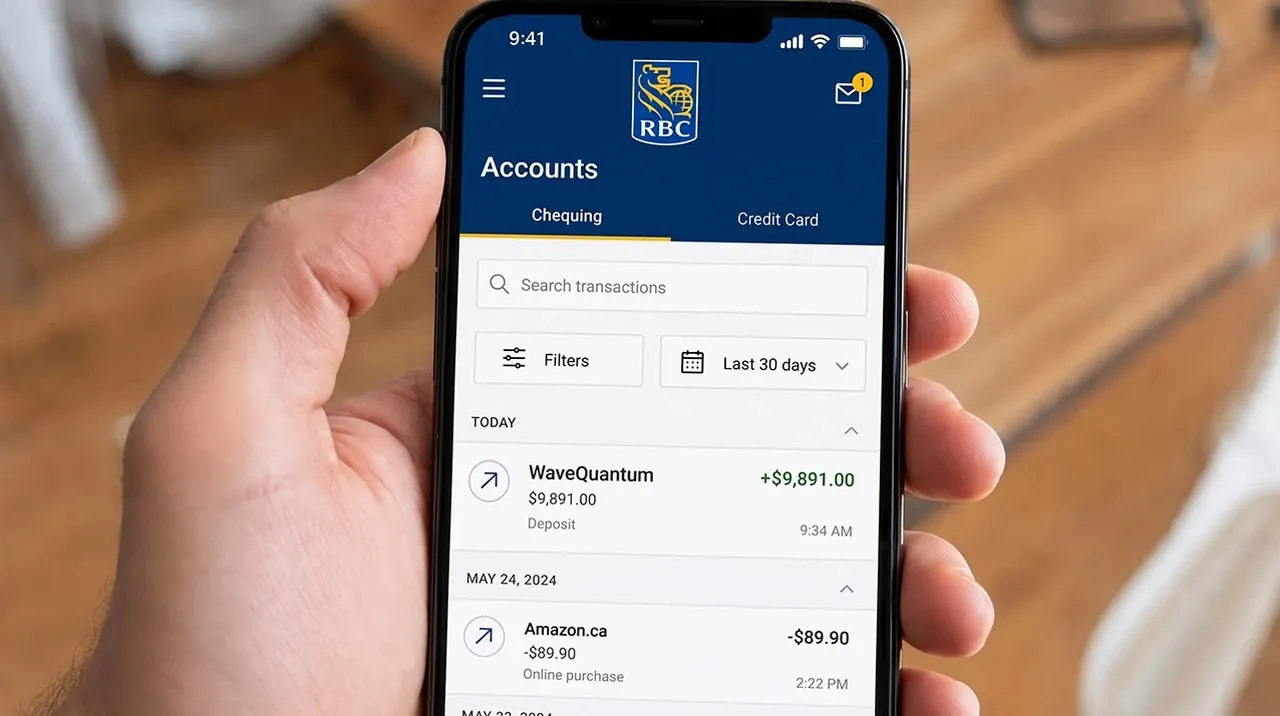
The deposit notification that arrived on my phone that night.
Day 10: The Moment of Truth — Withdrawing Those Profits
By the end of day 10, my balance stood at $17,300. But the real question for me was
this: would they actually give the money back?
I pressed "Withdraw Funds" and then entered my card details. Alex had warned me that the first withdrawal could
take up to 48 hours because of the standard banking security checks. Exactly 36 hours later, a notification hit my
phone: Deposit: +$17,300.00.
Start My Own
Test
My Conclusion
I didn't become a millionaire in a week. But I watched a system work with cold, impressive precision.
Watching the numbers on the screen — climbing, pausing, then climbing again — I kept thinking of my father. He
saved money his whole life. He died with $31,000 in a savings account that, over twenty
years, had earned him less than one month's paycheque.
If you're thinking about trying it yourself, here are the three rules that I set for myself:
1. Fill out the registration
form. Then wait for the advisor's call. Ask every uncomfortable question you can think of.
2. Start with an amount that feels comfortable to you. This is your own personal test, and not a lifetime
investment.
3. Don't expect instant results within the first hour. Let the automated system study the market and find the
pattern that works for you.
As of publishing this article, registration for WaveQuantum in Canada is still open
— but Alex confirmed they'll be closing it soon because of capacity limits.
You can check if registration in your region is still open by filling out the form below. It's free, and it
commits you to absolutely nothing until you decide to take the first step yourself.
Comments
Registered three days ago after reading this article. My advisor called me literally within half an hour. Calm, no pressure — walked me through verification and setup. Deposited $360, and the automated system's watching the market now. Will update.
I'm 71 and never thought I'd be writing comments about investing. I worked as a nurse my whole career, retired six years ago. Opening my computer to video-call my kids was the extent of my tech skills. My advisor — his name was Frank — spent nearly an hour with me. Explained it all slowly, no rush. It's my second month now, and for the first time in five years I've taken my grandkids to the lake.
Question for anyone who's tried it: do you have to keep watching the screen? I work, I can't stare at the app all day.
No, that's the whole point. I check it maybe twice a day out of habit, not because I have to. It runs on its own and alerts you if anything major happens. Full-time job here too, hasn't been an issue once.
I worked in a factory for 30 years. Seven years left before retirement. I had $23,000 sitting in savings, watching it quietly vanish to inflation. Started with $500. First two days — nothing, barely budged. Then the automated system made a few moves over the weekend and by Monday morning I saw $8,470. Second month with WaveQuantum now — finally bought myself a new car.
Wanted to write about the withdrawal, since that's what worried me most. Pressed withdraw on Wednesday evening — $9,800. Friday at 2:22pm I got a notification from the bank. Money was on the card. No extra forms, no "send us another document." Exactly like the advisor described.
Back in February my husband received a letter from the bank — the interest rate on our savings dropping to near 1%. We looked at each other and thought the same thing: why leave the money there? Found this article. Registered. Two months later — our first family trip to PEI in three years.
73 years old, a retired math teacher — there's a certain irony in that, isn't there? Did math my whole career and still kept my money in a savings account because I thought it was the responsible thing to do. When my son forwarded me this article I got annoyed at first — another internet trick. Then I reread the part about the automated system's safeguards. That's exactly my kind of thinking. If the system would rather stop than risk the capital, that's honest. I registered. The advisor spoke to me like a person, not a sales target. Second month now. $13,870 last month. First time I've slept soundly in years.
Question: what happens if the markets drop? Registered last week and there was bad news about the dollar on Wednesday…
That very Wednesday my automated system almost stopped trading too — paused the whole day. Balance didn't grow, but it didn't fall either. That's the safeguard the Researcher was talking about. Honestly, that was the moment I trusted the system.
My husband passed away two years ago. I was left on my own with a $1,340 monthly pension and $18,000 in savings. My daughter talked me into trying this. I hesitated for three weeks — scared of scams, of computers, of just about everything. Finally registered through the official form and waited for the call. The advisor was very patient. It's my fourth week now — that's $14,630 above my deposit. For me it's like a second small pension. First time in two years I'm not counting every dollar at the end of the month.
Just submitted my request. We'll see. If it's going well in a month, I'll come back and post an update.